
Types of Hearing Aids
From nearly invisible in-canal devices to powerful behind-the-ear models — find the style that fits your hearing, your comfort, and your lifestyle.
Find the style that fits your life
There are several types of hearing aids, all designed to help you hear better — a hearing care professional can help you choose the one that works best for you. Hearing aids differ in size, shape, power, and how they sit in or behind the ear. The right choice depends on your degree of hearing loss, the shape of your ear canal, your dexterity, and how discreet you’d like the device to be. Below is a clear guide to every style we fit at our Islamabad clinic — and if you’re unsure, our certified audiologists will help you decide after a proper hearing test.
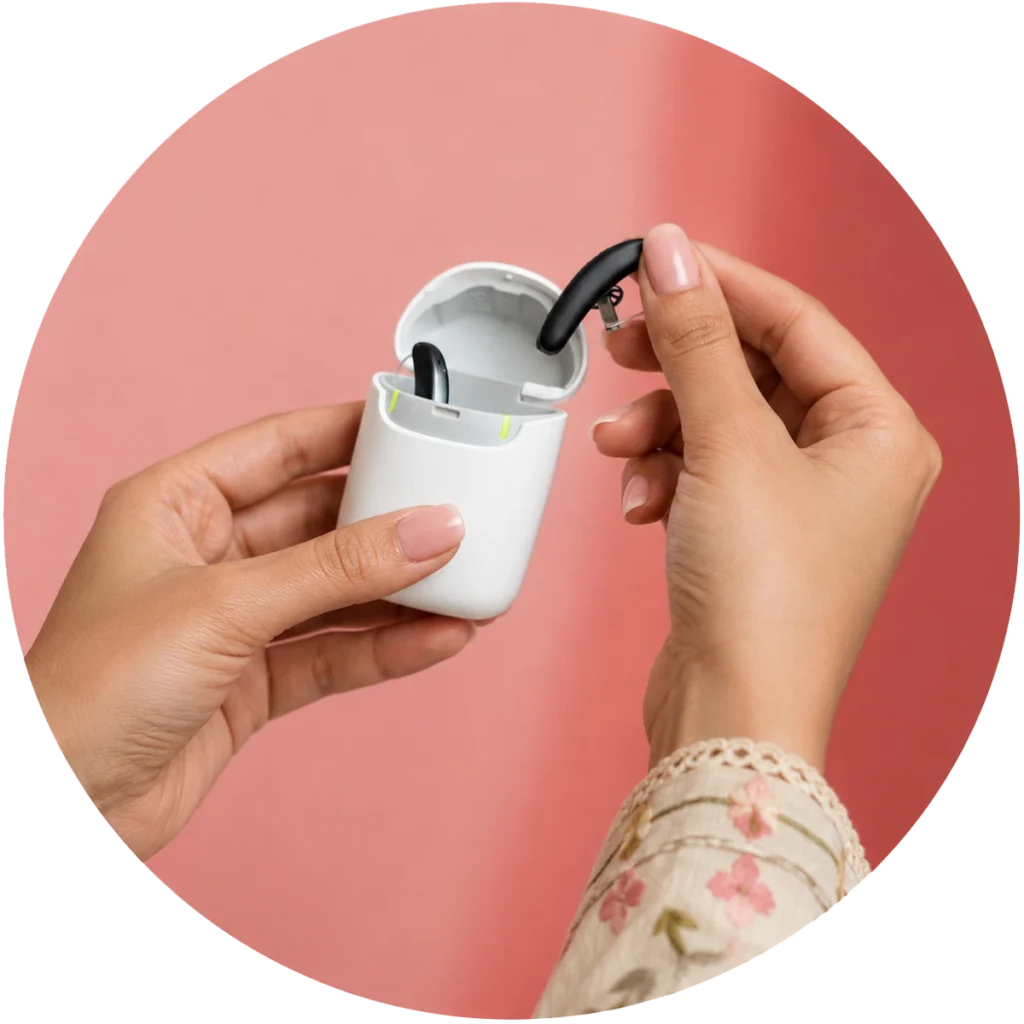
Receiver-In-the-Canal (RIC)
RIC models sit discreetly behind the ear while the receiver rests at the end of a thin, almost invisible wire inside the ear canal. Separating the receiver from the body of the device produces exceptionally clear, natural sound in a very slim design — which is why RIC is the most widely fitted style today. It suits most people and comes in a wide range of colours and finishes.
Mild to severe loss
Visibility very discreet
Rechargeable options
Behind-the-Ear (BTE)
The classic hearing aid style: the device sits behind the ear and sends sound through a clear tube into a custom-made earmould. BTE models house larger components, which means more amplification, longer battery life, and easier handling. They’re the strongest option available and the usual choice for severe to profound hearing loss, for children, and for anyone who finds smaller devices difficult to manage.
Mild to profound loss
Easiest to handle
Rechargeable options

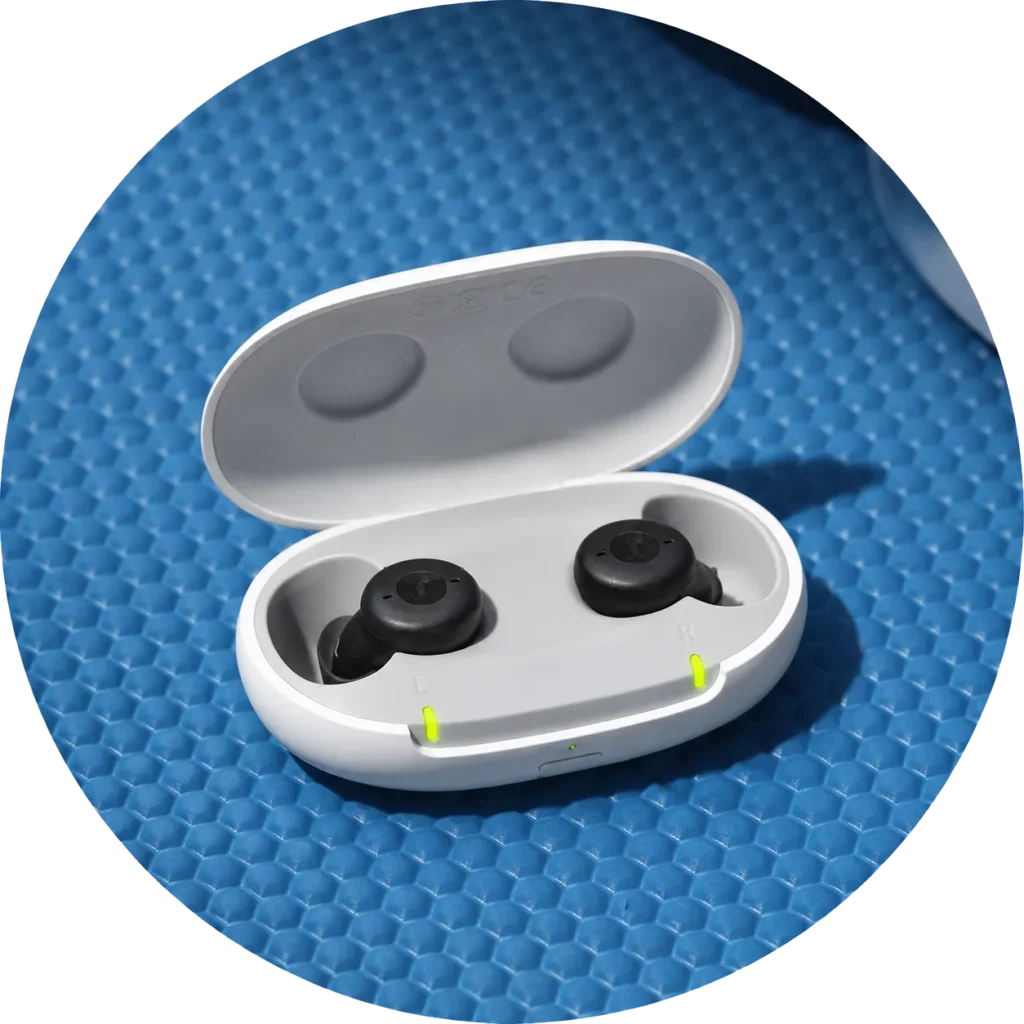
In-the-Ear (ITE)
ITE devices are custom-built from an impression of your ear and sit in the outer bowl of the ear. Because nothing sits behind the ear, they’re comfortable with glasses and masks, and their larger faceplate leaves room for volume controls, directional microphones, and Bluetooth streaming. A good middle ground between discretion and easy handling.
Mild to severe loss
Visibility noticeable
Rechargeable options
In-the-Canal (ITC)
Smaller than ITE, these custom devices sit partly inside the ear canal so only a small portion is visible. They strike a practical balance: noticeably discreet, yet still large enough to include a battery you can change easily and features like directional microphones. A popular choice for people who want subtlety without going fully invisible.
Mild to moderately severe
Barely visible
Custom fitted

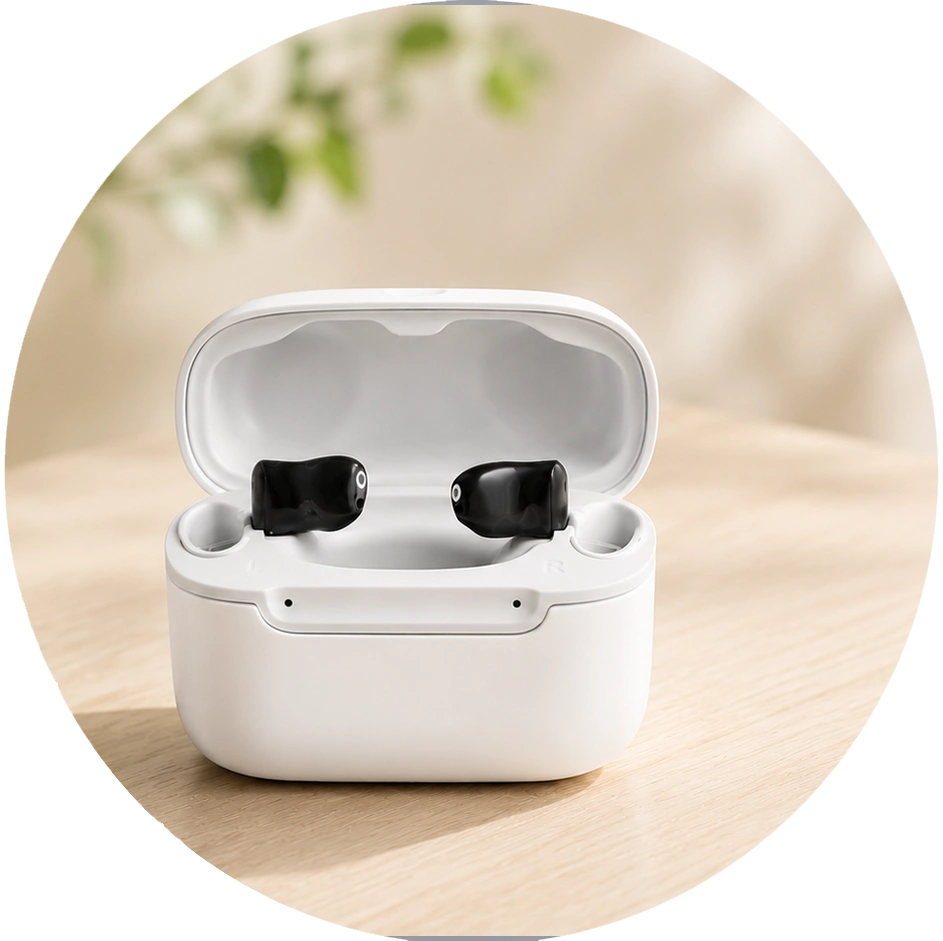
Completely-In-Canal (CIC)
CIC devices sit entirely within the ear canal, with only a tiny removal cord showing. Because the microphone sits deep in the canal, sound arrives more naturally — the ear’s own shape does part of the work. Their small size means shorter battery life and fewer manual controls, but for everyday discretion they’re hard to beat.
Mild to moderate loss
Visibility very discreet
Custom fitted
Invisible-In-Canal (IIC)
The smallest hearing aids available, IIC devices sit deep in the ear canal and are essentially undetectable in everyday conversation. They’re ideal if discretion is your priority. Because of their size they suit mild to moderate hearing loss and require an ear canal large enough to accommodate them — something we can check during your fitting appointment.
Mild to moderate loss
Virtually invisible
Instant-fit options
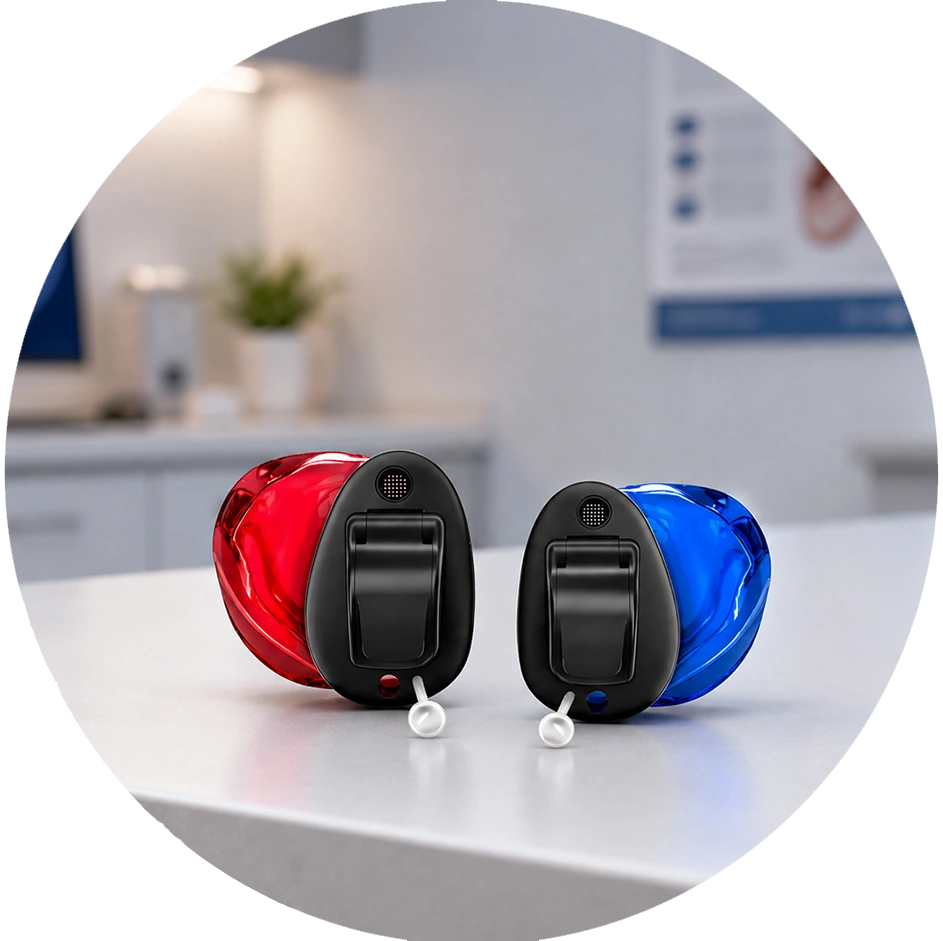
Features Worth Asking About
Style is only half the decision — these affect how a device performs day to day.
Rechargeable
Charge overnight and forget tiny batteries — a full day from one charge.
Bluetooth streaming
Take calls and stream music or TV straight into your hearing aids.
Speech in noise
Signia's RealTime Conversation Enhancement follows speakers as they move.
App control
Adjust volume and settings discreetly from your phone, anywhere.
Compare Hearing Aid Styles
A quick side-by-side look at how each style compares.
| Style | Where it sits | Suits | Visibility | Rechargeable | Best for |
|---|---|---|---|---|---|
|
RIC |
Behind ear + receiver in canal |
Mild to severe |
Very discreet |
Yes |
Most people — the all-rounder |
|
BTE |
Behind the ear |
Mild to profound |
Visible |
Yes |
Severe loss, children, easy handling |
|
ITE |
Outer bowl of the ear |
Mild to severe |
Noticeable |
Yes |
Glasses wearers, easy controls |
|
ITC |
Partly in the canal |
Mild to moderately severe |
Barely visible |
Some models |
Balance of size and features |
|
CIC |
Fully in the canal |
Mild to moderate |
Very discreet |
Some models |
Discretion with natural sound |
|
IIC |
Deep in the canal |
Mild to moderate |
Virtually invisible |
Yes (Silk) |
Maximum discretion |
Not sure which type is right for you?
You don’t have to decide alone. A 30-minute hearing test tells us exactly what you need — then our audiologists will recommend the styles that genuinely suit your hearing, your ears, and your budget.
Finding Your Fit
What is the best hearing aid for my hearing loss?
Hearing aids come in many styles to suit different needs and preferences. The single biggest factor is your degree of hearing loss, measured during a pure tone audiometry test. Here’s a general guide — your audiologist will confirm the right match for you.
Mild hearing loss
You follow most conversations but struggle in noise, or find soft speech and children's voices hard to catch.
Usually suits
IIC, CIC, RIC — discretion is very achievable at this level.
Moderate hearing loss
Conversation is difficult without concentration, and you likely turn the TV up louder than others prefer.
Usually suits
RIC, ITE, ITC — a good balance of power and subtlety.
Moderately severe
Most speech is unclear at normal volume, and group settings become genuinely tiring.
Usually suits
RIC, ITE, BTE — more amplification becomes important.
Severe to profound
Ordinary conversation isn't audible without help; you rely heavily on lip reading or visual cues.
Usually suits
BTE with custom earmould — maximum power and reliability.