Hearing Assessment
Accurate, comfortable hearing tests for adults, children, and newborns — by certified audiologists.
Why a Hearing Test Matters
A hearing assessment also called a hearing test or audiometry — is a straightforward set of checks that measures how well you hear and identifies exactly where any difficulty is coming from. It’s completely painless, takes under an hour, and gives you clear answers rather than guesswork. Every good hearing solution starts here. Without an accurate test, choosing a hearing aid is guesswork — the type, degree, and shape of your hearing loss determine which device will genuinely help and how it should be programmed.
At Signia Siemens Hearing Center, our certified audiologists use calibrated, professional-grade equipment and explain your results in plain language before recommending anything at all. Hearing loss usually develops gradually, so most people live with it for years before seeking help. A simple test today can prevent years of unnecessary strain, missed conversation, and social withdrawal.
Hearing Tests We Offer
Your audiologist will select the right combination for your age, symptoms, and history — most adults need only the first two or three.
Pure Tone Audiometry (PTA)
Maps the softest sound you can hear at each pitch, establishing the degree and type of hearing loss in each ear.
Speech Audiometry
Measures how clearly you understand words, not just detect sound — key to predicting hearing aid benefit.
Tympanometry
Checks eardrum movement and middle-ear function using gentle air pressure — detects fluid and blockages.
Otoacoustic Emissions (OAE)
A quick, painless check of inner-ear function needing no response — ideal for newborns and young children.
Auditory Brainstem Response (ABR / BERA)
Records how the hearing nerve responds to sound. Needs no participation and can be done while a baby sleeps.
Auditory Steady State Response (ASSR)
Estimates hearing levels at specific frequencies objectively — used where conventional testing isn't possible.
Paediatric Testing
Play-based testing that turns the assessment into a game, giving reliable results for toddlers and pre-schoolers.
Hearing Tests We Offer
Your audiologist will select the right combination for your age, symptoms, and history — most adults need only the first two or three.
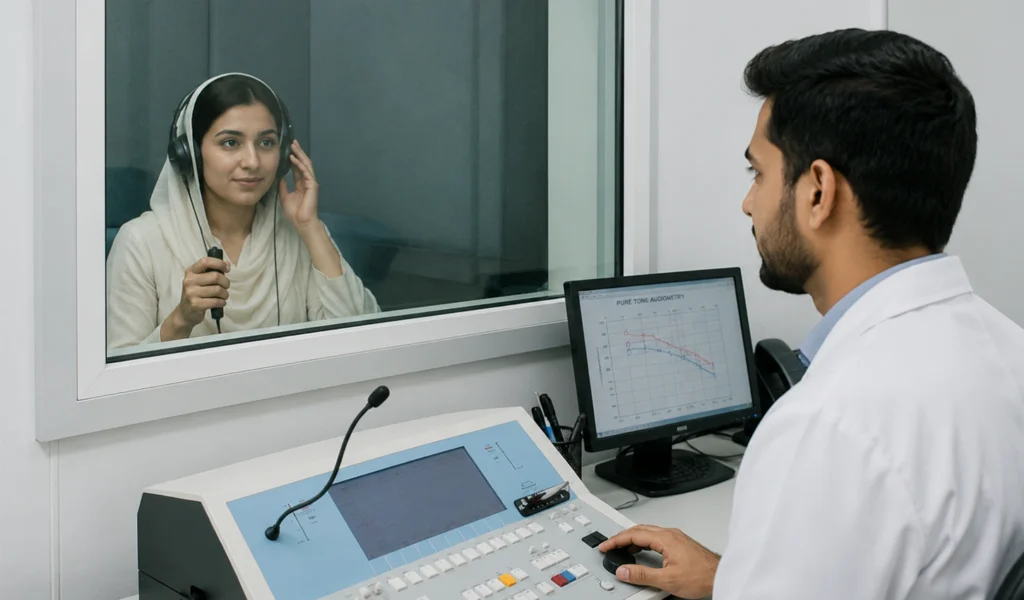
Pure Tone Audiometry (PTA)
The foundation of every hearing assessment. Wearing headphones in a quiet room, you signal each time you hear a tone, letting us map the softest sound you can detect at each pitch — and pinpoint the exact degree and type of hearing loss in each ear.
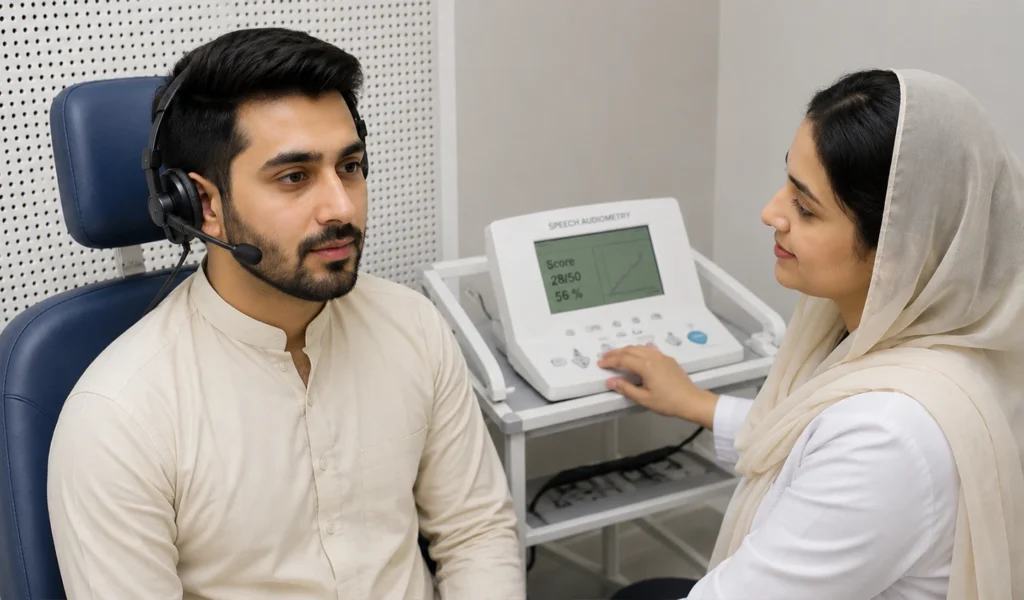
Speech Audiometry
Hearing a sound and understanding a word are two different things. You'll repeat words played at different volumes, letting us measure the softest level at which you recognise speech and how clearly you understand it — key to predicting how much a hearing aid will help.
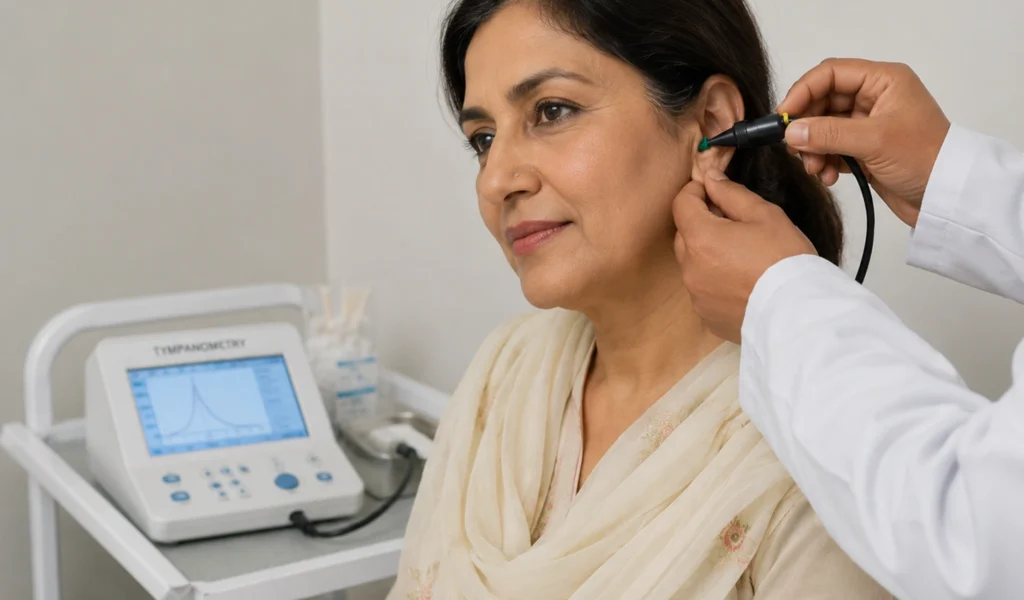
Tympanometry
A quick, comfortable check of the middle ear. A soft probe gently varies the air pressure in your ear canal while measuring how your eardrum responds, helping detect fluid, blockages, perforations, or stiffness — issues that are often treatable medically rather than with a hearing aid.
Acoustic Reflex
Usually carried out alongside tympanometry, this measures the tiny involuntary muscle contraction your middle ear makes in response to loud sound. Whether that reflex is present, absent, or unusual helps identify the type of hearing loss and where along the hearing pathway it lies.
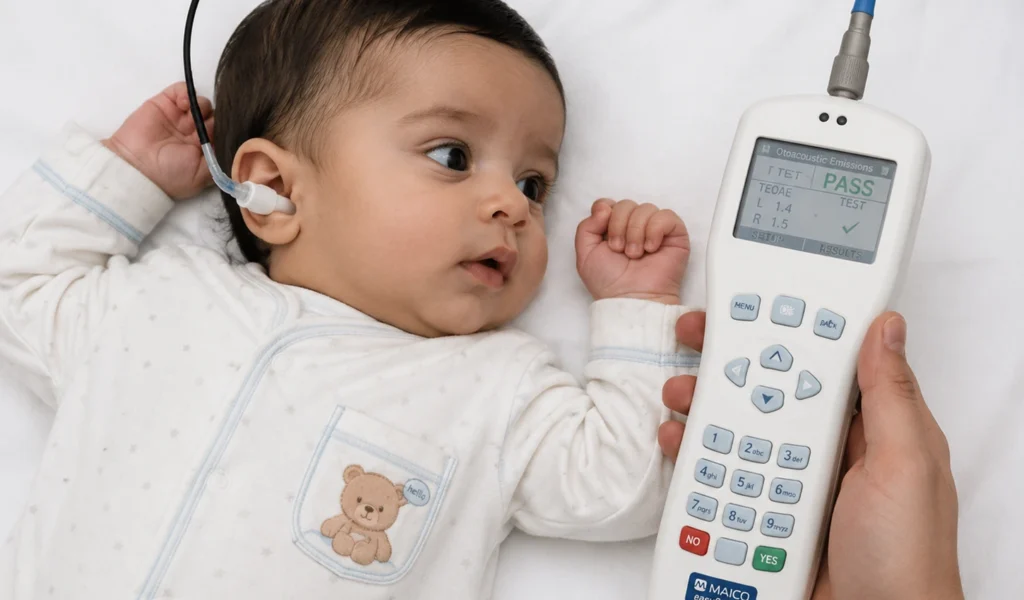
Otoacoustic Emissions (OAE)
A healthy inner ear gives off faint sounds when stimulated. A small probe in the ear canal detects these emissions to confirm the cochlea is working normally. Because it needs no response from the patient, it's ideal for newborns, young children, and hard-to-test patients.
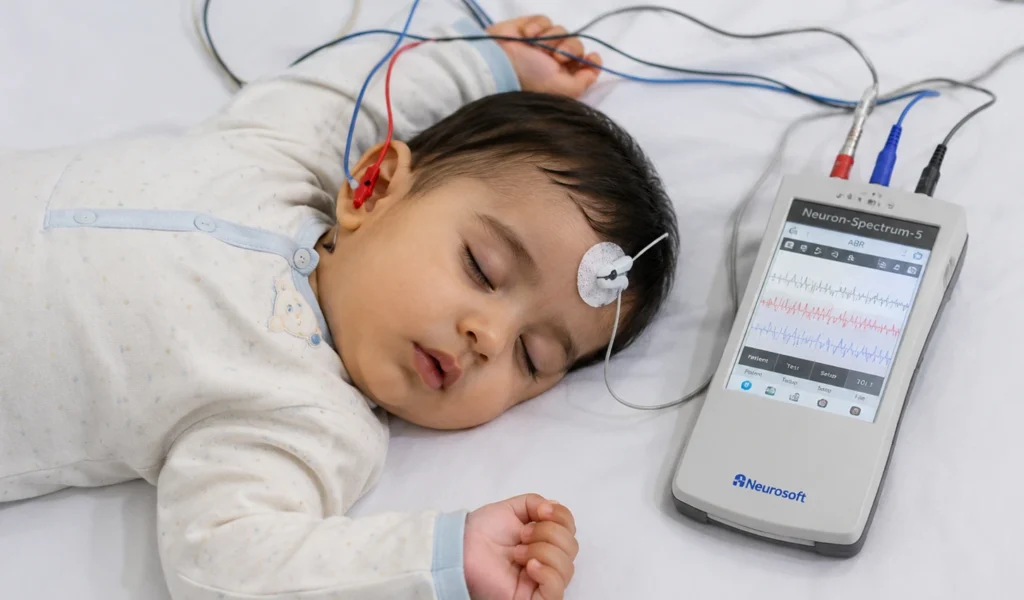
Auditory Brainstem Response (ABR / BERA)
Also known as BERA, this records how your hearing nerve and brainstem respond to sound. Small sensors on the head pick up electrical activity while soft clicks play through earphones — no participation needed, so it can even be done while a baby sleeps.
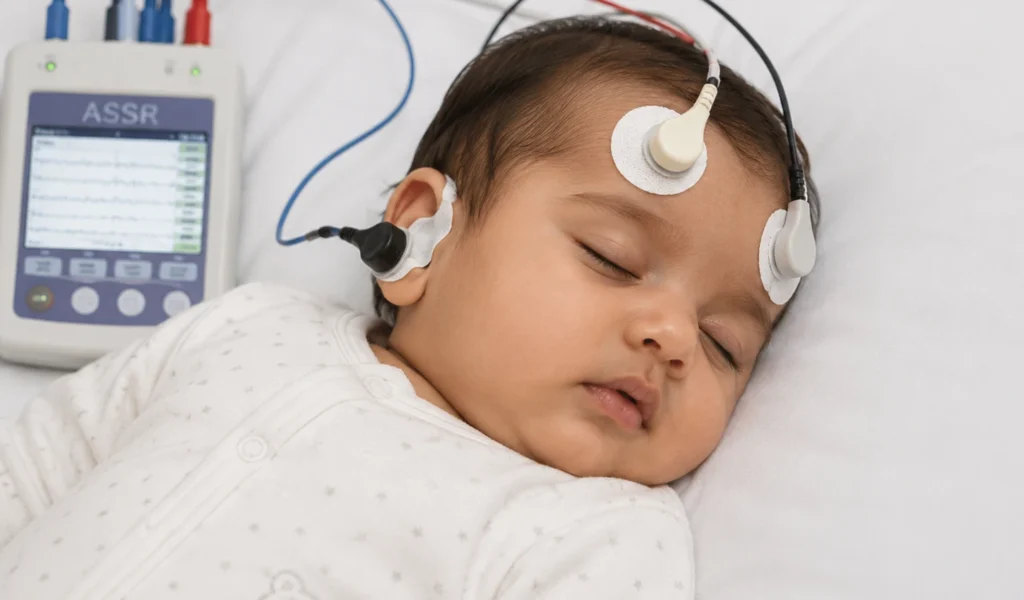
Auditory Steady State Response (ASSR)
An objective test that estimates your hearing thresholds at specific pitches by recording the brain's steady response to continuous tones. It needs no active participation, making it especially valuable for infants and young children, and helps programme a hearing aid.
Paediatric Testing
For toddlers and pre-schoolers, we turn testing into a game. Visual Reinforcement Audiometry rewards a child's turn toward sound with an animated toy, while Play Audiometry has them drop a block at each tone, reliable results in a child-friendly way.
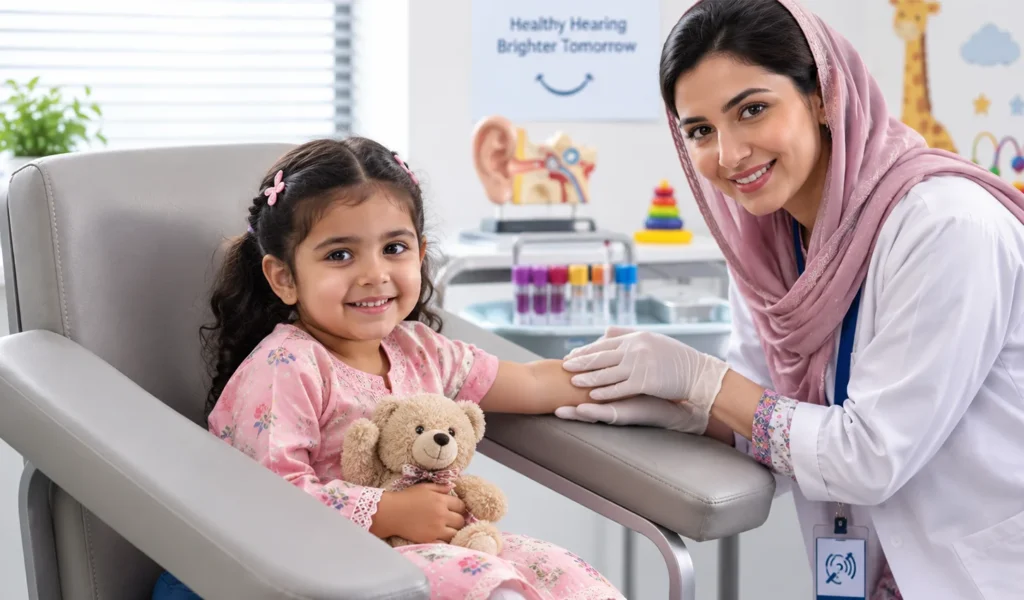
Your Appointment, Step by Step
No needles, no discomfort, no surprises. Here’s exactly what to expect from start to finish.
We talk first
Your audiologist asks about your hearing concerns, history, and noise exposure.
Ear examination
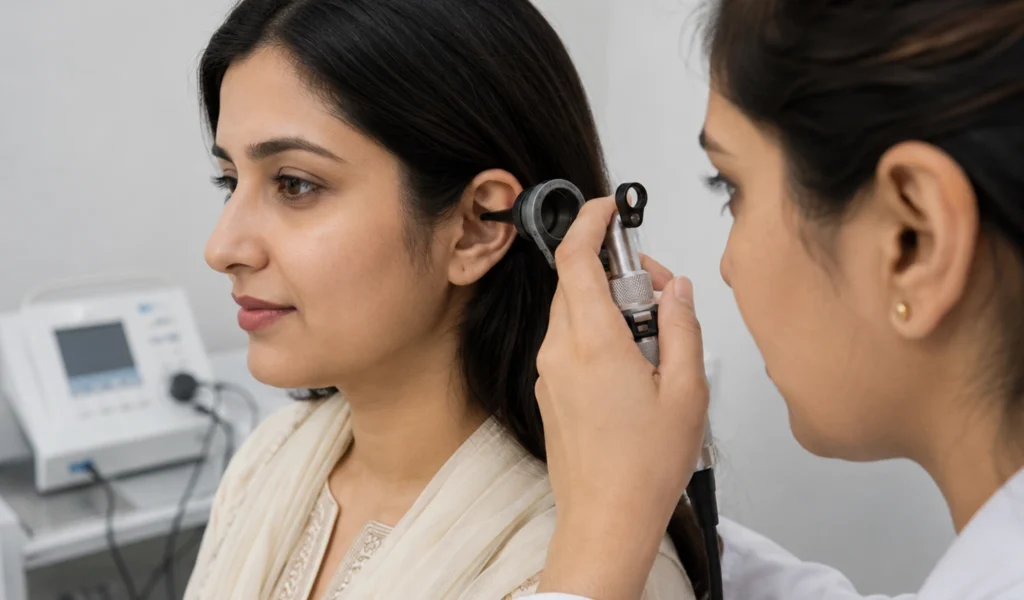
A painless look inside your ear canal and eardrum, checking for wax or infection.
The tests
You'll wear headphones in a quiet room and respond to tones and words.
Results & options
We explain your audiogram in plain language and advise honestly — no pressure to buy.
Not sure which test you need?
Call us and describe what you’ve been experiencing — our audiologists will tell you exactly which assessment is right for you or your family member.
Common Signs of Hearing Loss
If any of these sound familiar, a hearing test is worth booking. Noticing two or more?
Book a hearing test →